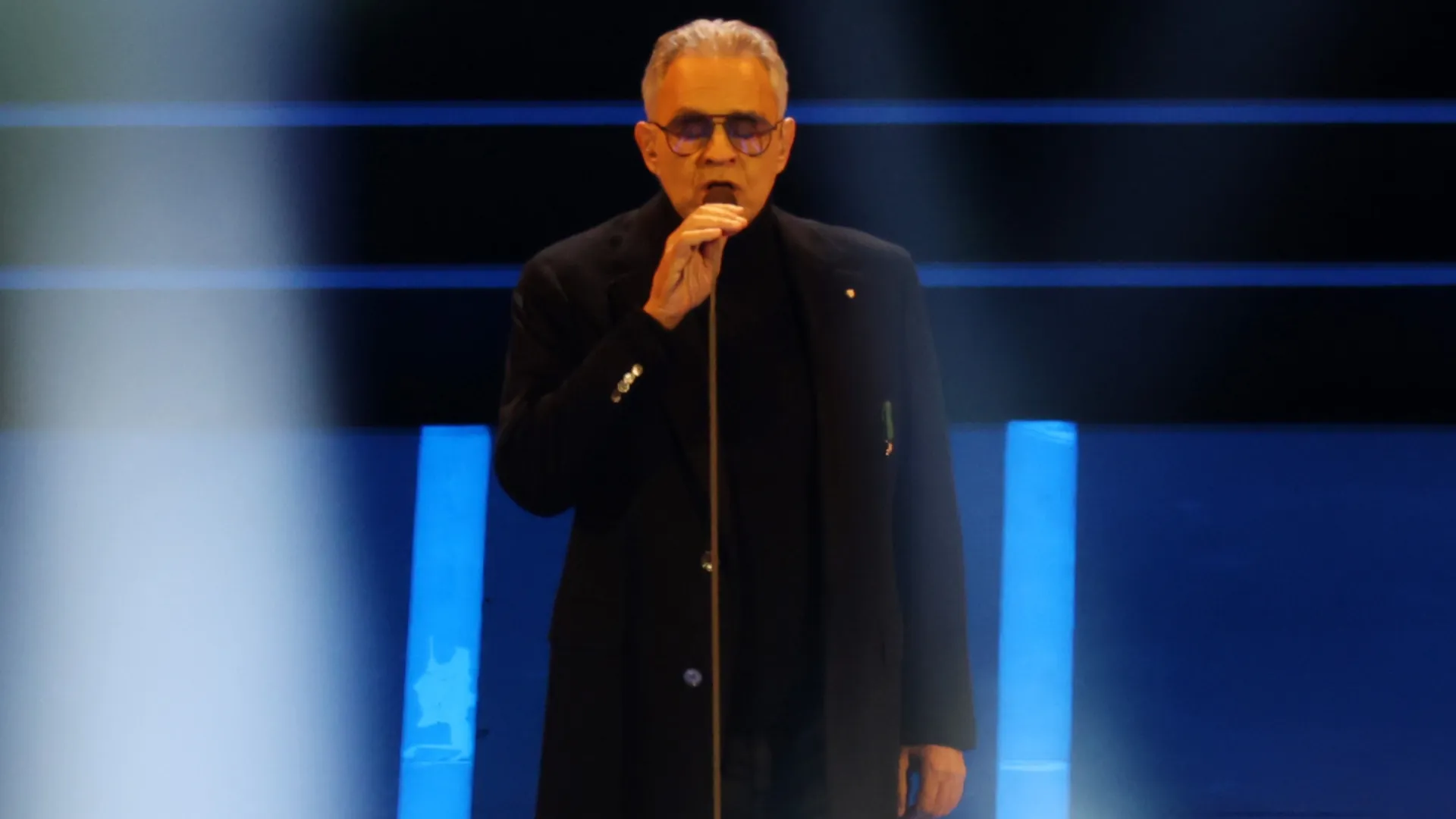
As the 2026 Winter Olympics Opening Ceremony neared its finale, a hush swept across San Siro Stadium—one so complete it felt almost unreal. Andrea Bocelli had begun to sing.
Performing “Nessun Dorma,” the legendary Italian tenor delivered a moment that instantly etched itself into Olympic history. With no spectacle competing for attention, no distractions beyond the orchestra and the Olympic flame, Bocelli’s voice filled the cold Milan night and brought an entire stadium to stillness.
It was breathtaking.
A Return Twenty Years in the Making
Bocelli’s appearance carried deep symbolism. Twenty years earlier, at the 2006 Winter Olympics in Turin, he performed the original song “Because We Believe (Ama Credi E Vai)” during the closing ceremony. In 2026, he returned not with a new composition, but with one of the most iconic arias ever written.
“Nessun Dorma,” from the final act of Puccini’s Turandot, translates to “none shall sleep.” In the opera, the aria is sung by a prince filled with longing and determination as an entire kingdom waits for dawn. Over time, the song has come to represent triumph, hope, and perseverance—most famously through Luciano Pavarotti, whose 1990 World Cup performance transformed it into a global anthem for major sporting events.
On this night, Bocelli gave it new life.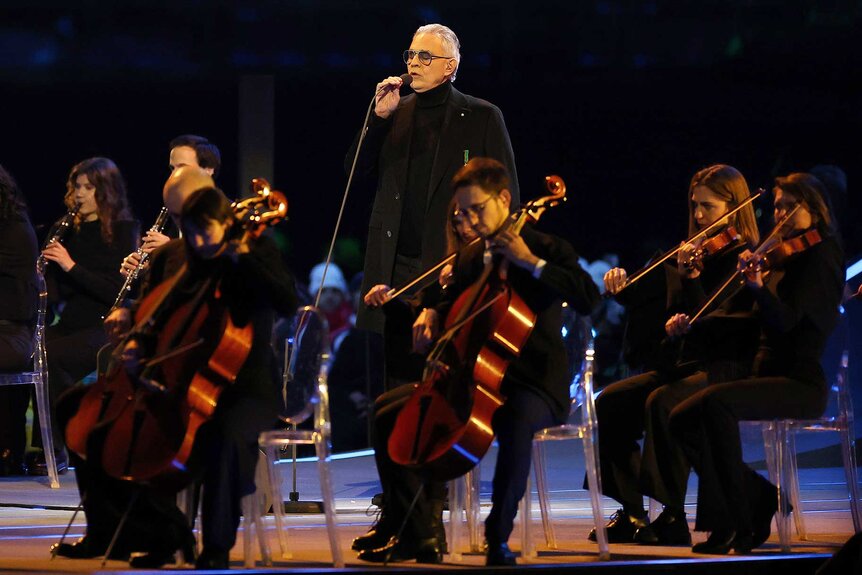
A Voice That Stopped Time
As the Olympic torch entered San Siro, having traveled for months from Olympia, Greece, Bocelli’s voice rose with quiet power. Each note seemed to stretch time, turning a massive stadium into an intimate, almost sacred space.
Viewers around the world described chills, tears, and a sense of shared emotion—proof that even in a production filled with light, movement, and scale, a single human voice can still command absolute attention.
Bocelli on the Meaning of the Moment
Ahead of the ceremony, Bocelli reflected on what returning to the Olympics in his home country meant to him.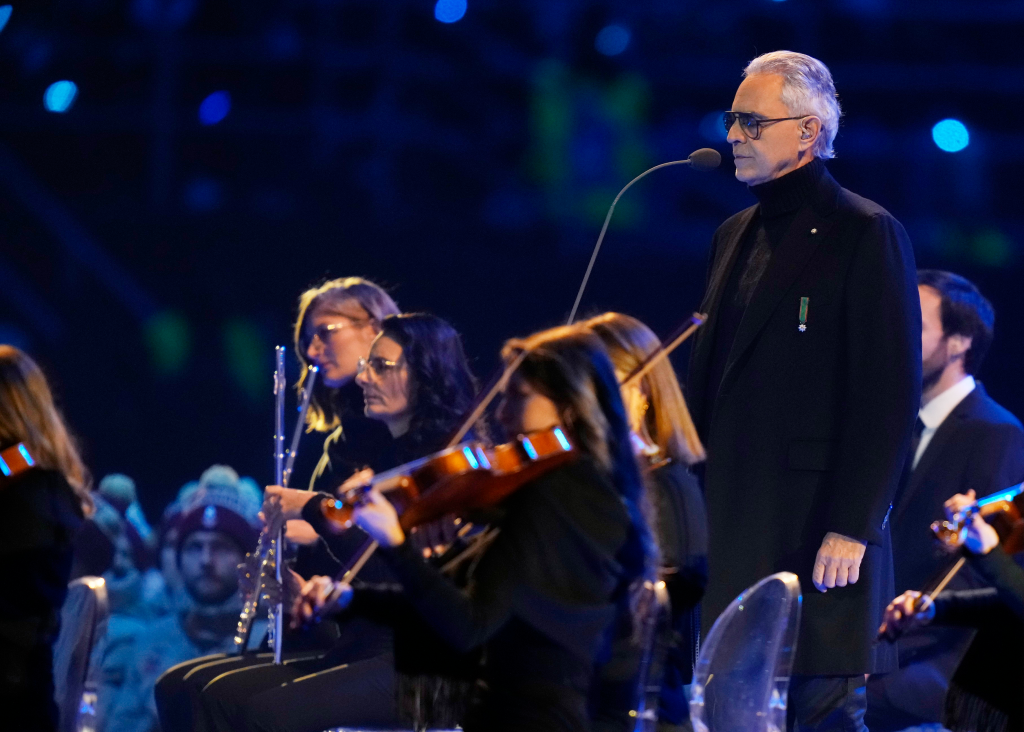
“I remember the Torino 2006 ceremony: a packed stadium, an incredibly emotional and affectionate crowd—an atmosphere that only the Olympic Games can create,” he shared. “When I was young, learning the art of singing, I dreamed of performing one day, perhaps in a town square. I never dared to hope for more. Being on a stage like this is an indescribable emotion and a great honour.”
For Bocelli, the focus wasn’t on his own performance, but on the spirit of the Games themselves.
“What matters most is not the emotion I leave behind,” he explained, “but the emotion that the Olympic Games and sport can create. Sport embodies values that should take root in everyone’s hearts—young and old alike.”
A Moment That Will Endure
Without fireworks or theatrics, Andrea Bocelli transformed “Nessun Dorma” into a universal cry of hope, resilience, and belief. In a world often defined by noise, his performance proved the power of silence—and of music that speaks directly to the soul.
For a few unforgettable minutes, Milan stood still, the Olympic flame burned bright, and millions around the world felt the same thing at once.
It wasn’t just an opening ceremony highlight.
It was a moment that will be remembered long after the Games are over.