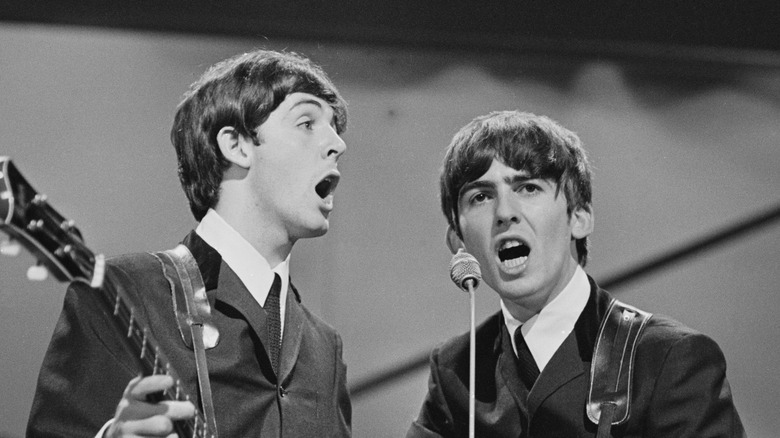
On February 9, 1964, something extraordinary flickered across black-and-white television screens in living rooms across America. An estimated 73 million people — nearly 40% of the country — tuned in to watch four young men from Liverpool perform on The Ed Sullivan Show.
What happened next wasn’t just a performance.
It was a cultural detonation.
The Moment the World Shifted
The Beatles walked onto the stage in matching suits, hair falling just a little too long over their foreheads. To adults, they looked unruly. To teenagers, they looked like freedom.
The screaming began before they even played a note.
Then came the opening chords.
In those electrifying minutes, something shifted. Music felt different. Youth felt powerful. The generation gap suddenly had a soundtrack.
It wasn’t simply about catchy melodies or clever lyrics. It was about energy — joyful, rebellious, magnetic energy. The kind that makes parents uneasy and teenagers feel understood.

Beatlemania in Real Time
The hysteria was unlike anything America had seen. Girls cried. Cameras shook. Police struggled to contain crowds outside the theater. Newspapers struggled to explain it.
But this wasn’t random chaos.
This was the birth of modern pop superstardom.
The Beatles didn’t just perform songs — they created a phenomenon. Their look influenced fashion. Their accents charmed audiences. Their humor in interviews made them feel human, not distant idols.
They weren’t just musicians.
They were a movement.
A Cultural Before and After
Before that night, American pop culture was still recovering from the loss of Elvis Presley to the Army and the assassination of President Kennedy just months earlier. The country felt heavy.
The Beatles brought something new: optimism wrapped in rhythm.
After February 9, 1964, the blueprint changed.
Artists weren’t just singers anymore — they were brands, personalities, global forces. Television wasn’t just entertainment — it was a launchpad. Youth culture wasn’t a phase — it was power.
From stadium tours to fan culture to global chart domination, the modern music industry traces its DNA back to that one broadcast.
Sixty-Two Years Later
More than six decades on, the footage still feels surreal. The grainy black-and-white image only amplifies its impact. You can feel the electricity. You can hear the disbelief in the crowd.
It doesn’t look like nostalgia.
It looks like ignition.
And it raises a fascinating question:
Would today’s biggest icons — from pop megastars to global boy bands — even exist without that moment rewriting the rules?
That night wasn’t just about four musicians from Liverpool.
It was about the instant the future arrived — loud, joyful, and impossible to ignore.
And 73 million people watched it happen.