
It was, by every visible measure, a spectacular night for American ice dance.
Madison Chock and Evan Bates delivered a program many fans immediately called “gold-level” — technically sharp, emotionally layered, and performed with the kind of trust and chemistry only years of partnership can build. When their final pose hit and the scores flashed, they had earned Olympic silver at Milano 2026.
For most athletes, that moment would be pure celebration.
Instead, it became something more complicated.
Shortly after the event, NBC analyst Scott Hamilton praised the performance, calling it a “phenomenal night of Ice Dance.” His message was congratulatory and gracious. But online, a different tone was taking shape. Across social media platforms, viewers questioned not only the razor-thin scoring margin but also the broadcast’s handling of it.
Many fans believed Chock and Bates had done enough to win gold. The margin separating first and second was narrow, and scrutiny quickly centered on a scoring outlier that some viewers felt deserved clearer explanation. What intensified the reaction wasn’t simply the result — it was the perception that the commentary avoided directly addressing the controversial details.
“Say it plainly,” some fans demanded online.
For these viewers, this wasn’t about undermining the medalists who took gold. It was about transparency. Olympic figure skating has long walked a delicate line between artistry and numerical precision, and passionate audiences want to understand how — and why — medals are decided. When commentary appears cautious, even diplomatic, it can leave space for frustration to grow.
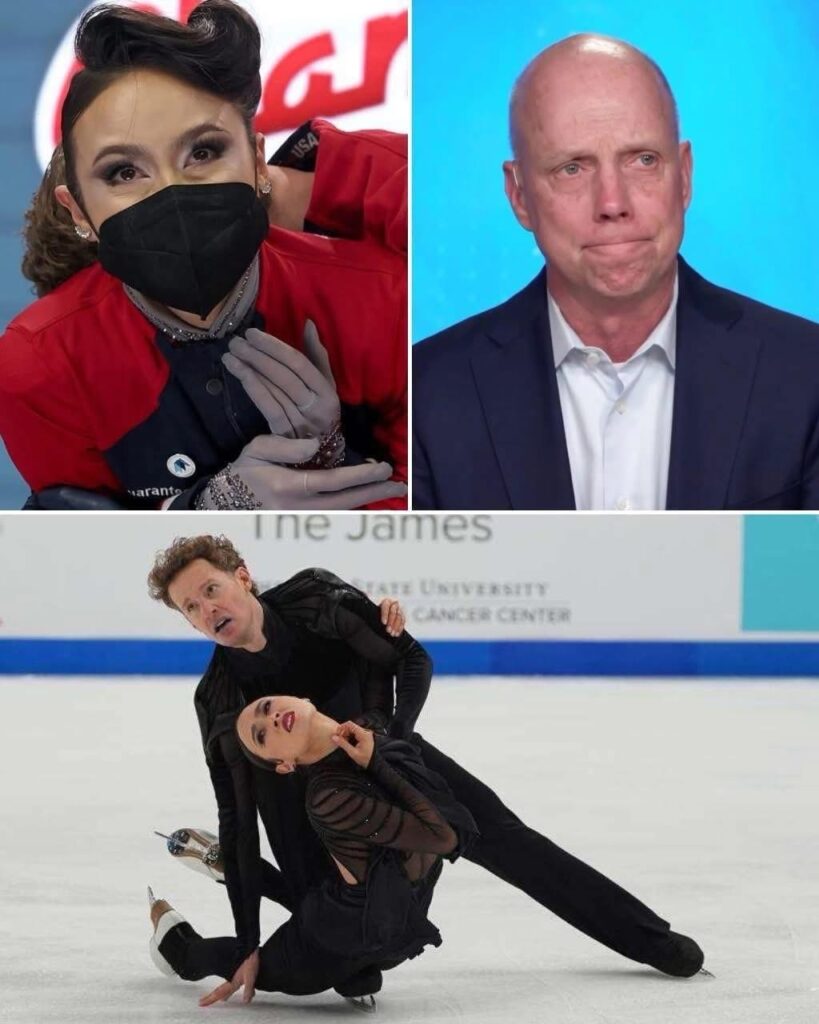
NBC’s role is a complex one. Broadcasters must balance analysis with respect for athletes, officials, and the integrity of the event. But in an era where fans dissect every protocol sheet in real time, many expect sharper clarity rather than careful neutrality.
Chock herself described the outcome as “bittersweet,” a word that captured both pride and lingering what-ifs. Silver at the Olympics is a monumental achievement. Yet elite competitors — and their supporters — inevitably measure performances against the highest possible prize.
In the hours following the event, the conversation grew larger than one program or one medal. It became about trust in judging systems, about how scoring nuances are communicated to the public, and about whether networks should more directly address contentious elements when they arise.
What remains undeniable is this: Chock and Bates skated a program powerful enough to ignite global debate. Their performance commanded attention. Their artistry moved audiences. And their narrow loss reminded everyone just how fine the margins are at the highest level of sport.
On the ice, it was a phenomenal night.
Off the ice, it became a reminder that in Olympic competition, the story rarely ends when the music stops.