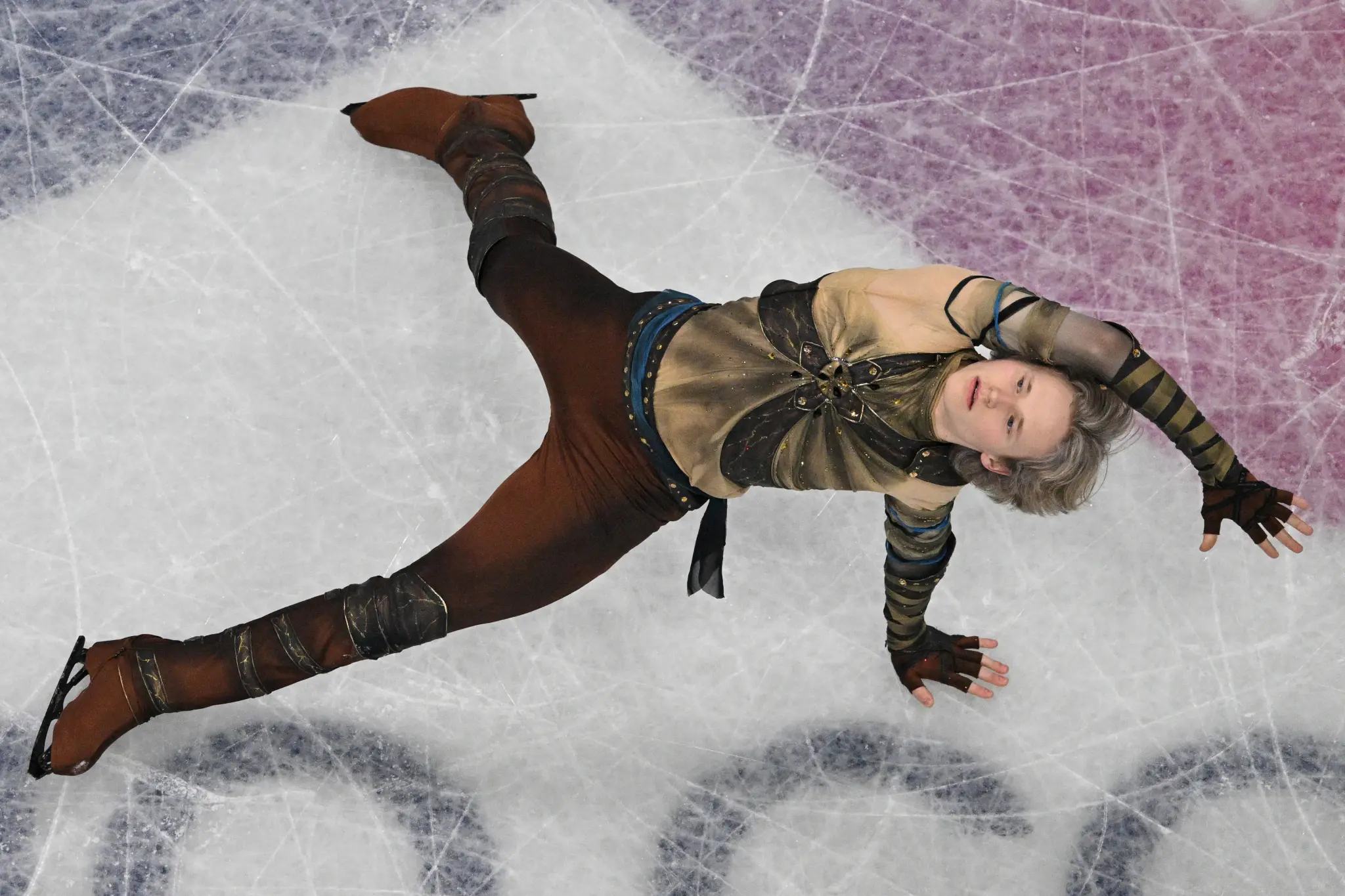
When Ilia Malinin finished in a shocking eighth place, the result sent ripples through the skating world. For an athlete widely celebrated as a generational talent, the outcome felt almost unimaginable. But what followed may have been even more powerful than the placement itself.
His coach, Rafael Arutyunyan, didn’t hesitate. In a rare and candid moment, he publicly took responsibility—clearing his skater of blame and turning the spotlight onto himself and the team. Arutyunyan admitted they had not done enough to shield a young athlete from the immense pressure that surrounded him. Under the unforgiving glare of Olympic lights, expectation can become overwhelming. Even the strongest competitors are not immune.
Malinin has long been hailed as the future of figure skating—a prodigy capable of rewriting technical boundaries. With that praise came relentless scrutiny. Every performance was measured against perfection. Every mistake magnified. And in the age of social media, criticism is not confined to the rink; it follows athletes everywhere.

In the days leading up to the competition, Malinin shared a haunting message about online hatred and what he described as an “inevitable crash.” At the time, some saw it as frustration. Now, it feels like a glimpse into the emotional toll he was carrying. The words reveal a young man acutely aware of the storm gathering around him—one fueled not only by competition, but by public expectation and digital hostility.
Elite sport often celebrates resilience, grit, and the ability to withstand pressure. But rarely does it pause to examine the human cost. Athletes are trained to perfect their bodies, yet their minds bear an equally demanding burden. When expectation becomes suffocating, even the most gifted performers can falter.
Arutyunyan’s willingness to shoulder the blame speaks to a deeper truth: success in sport is never the responsibility of one person alone. It is built on a network of coaches, mentors, and support systems. When that system falters—even unintentionally—the impact can be profound.
Malinin’s eighth-place finish will undoubtedly be remembered as a surprising result. But it may also mark a pivotal moment—a reminder that behind every prodigy is a young person navigating extraordinary pressure. In acknowledging the psychological weight his athlete carried, Arutyunyan opened a broader conversation about mental health, online toxicity, and the expectations placed on rising stars.
Champions are not defined solely by medals. They are shaped by adversity, growth, and the courage to continue. For Malinin, this chapter may not represent a fall from grace, but rather a moment of reckoning—one that could ultimately strengthen both the skater and the team around him.