On a humid summer afternoon in Memphis, the world received news it wasn’t ready to hear. Elvis Presley — just 42 years old — had died at Graceland. The mansion that once stood as a monument to ambition and triumph suddenly became a place of mourning.
Outside the gates, thousands gathered. Some held flowers. Some held candles. Many simply stood in stunned silence, tears streaming down their faces. For millions, Elvis was more than a singer. He was youth, rebellion, romance, and rhythm wrapped into one unforgettable voice. And now, that voice had gone quiet.
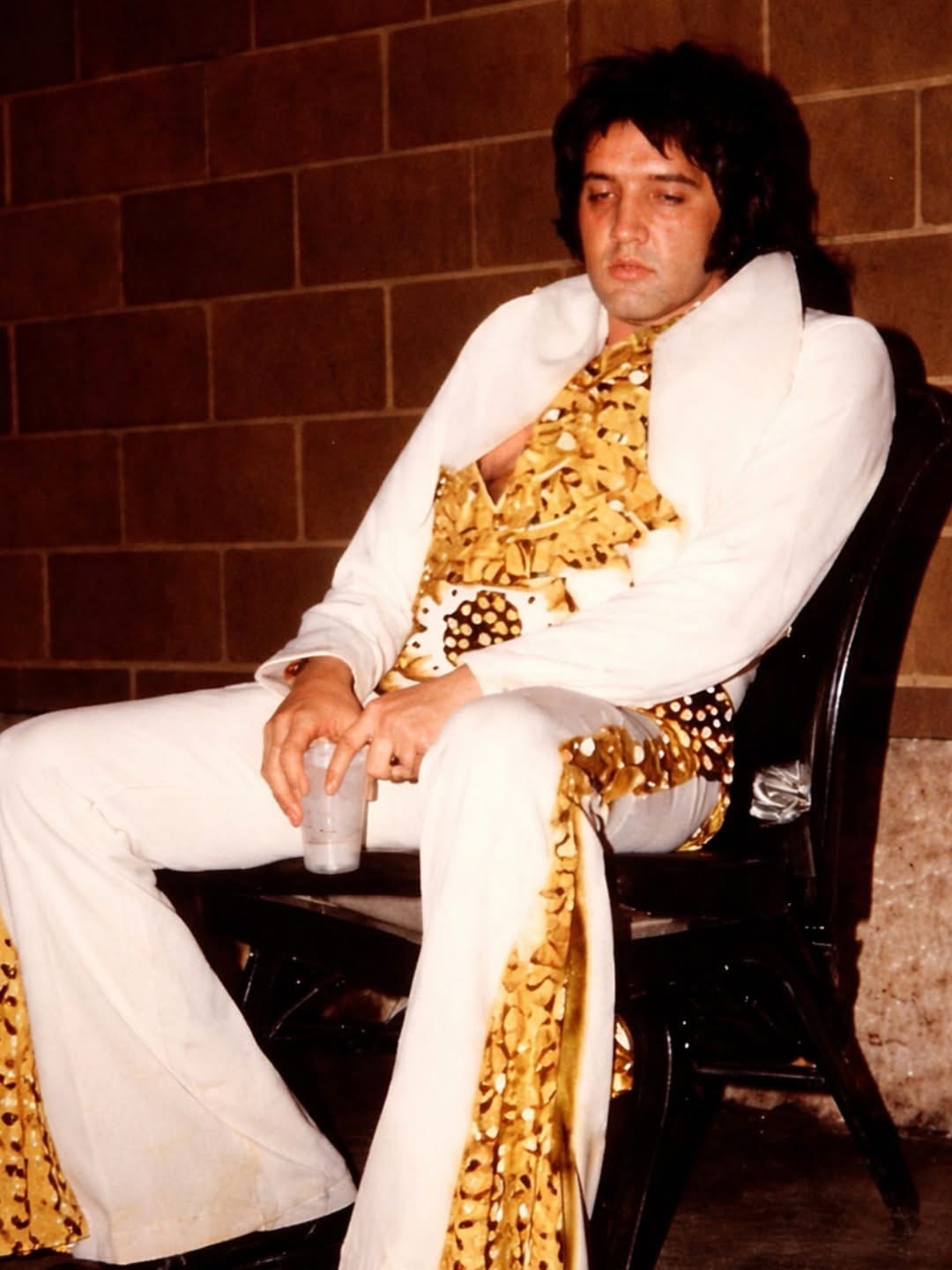
In the months leading up to his death, it was clear that Elvis was struggling. The relentless pace of fame, personal battles, and years of touring had taken their toll. He appeared tired. His once-electric movements slowed. His performances could be uneven. The King, once unstoppable, seemed weighed down by more than just expectation.
And yet, in his final recorded performance of “Unchained Melody,” something extraordinary happened.
Seated at the piano, visibly exhausted, Elvis sang with a rawness that cut straight to the heart. The notes weren’t perfect. His voice trembled. But it carried something deeper than technical brilliance — it carried soul. It was vulnerable, honest, and profoundly human. In that moment, he wasn’t an icon in a jeweled jumpsuit. He was a man pouring out what little strength he had left into a song.
When news of his passing spread, disbelief followed. Many refused to accept it. Rumors began almost immediately. Sightings were reported across the country. Conspiracy theories took on a life of their own. Perhaps imagining Elvis still alive somewhere felt easier than facing the silence he left behind.
The grief was not confined to America. It echoed around the globe. Radio stations played his music nonstop. Fans gathered in vigils. Generations who had grown up with his voice felt as though they had lost a part of their own story.

Elvis once said, “Truth is like the sun. You can shut it out for a time, but it ain’t going away.”
The truth of his life is layered. It holds triumph and turmoil, brilliance and vulnerability. He was not perfect. He was human. But his impact is undeniable. He reshaped popular music, bridged cultural divides, and became a symbol of an era that still resonates today.
Nearly five decades later, Graceland remains a place of pilgrimage. His songs still play at weddings, in cars, on late-night radios. New generations discover him and feel that same spark.
The world may have lost Elvis Presley on August 16, 1977.
But the music — the voice — the feeling he gave to millions — never left.
And in that way, the King still lives on.