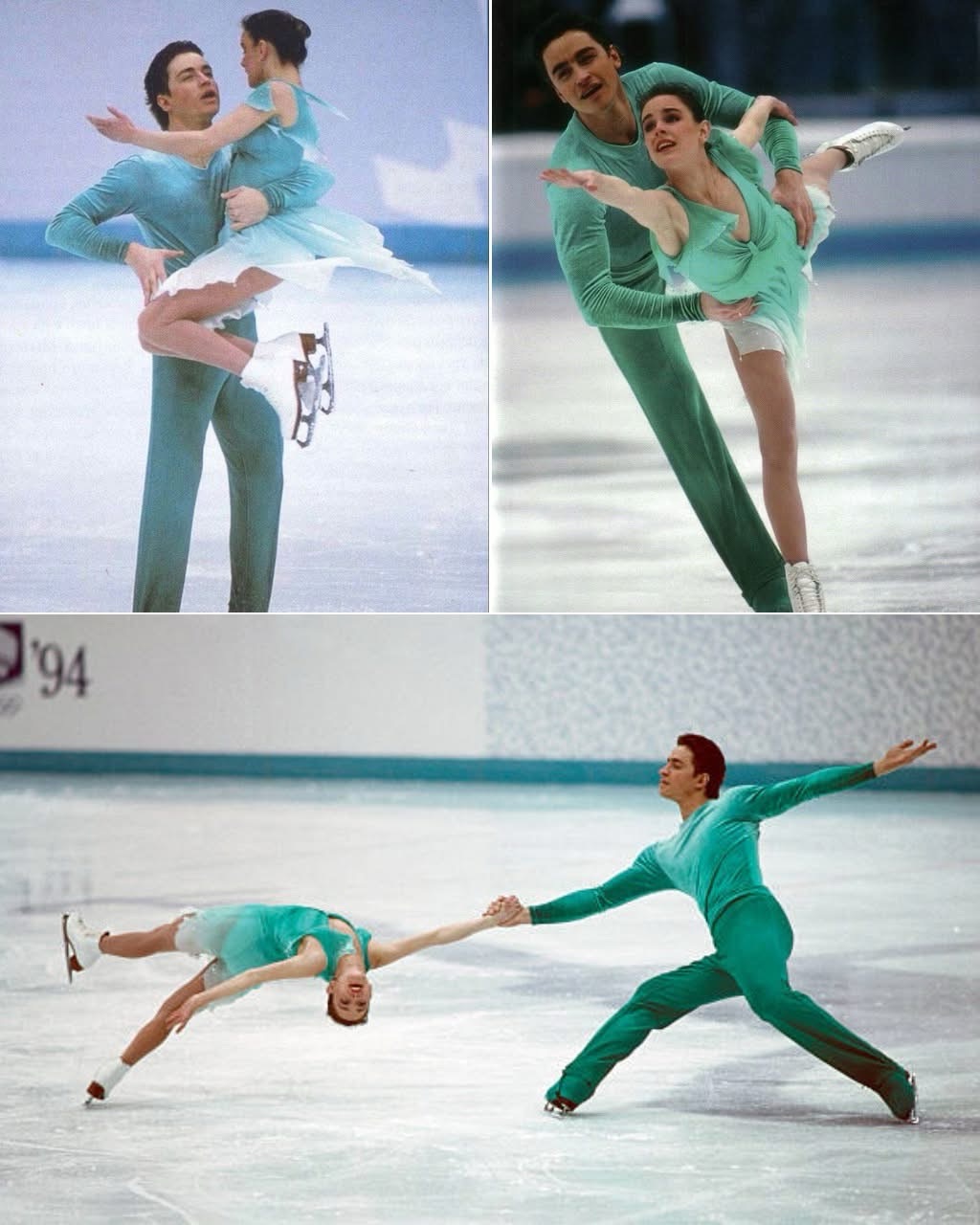
On a winter evening in 1994, beneath the shimmering lights of the Lillehammer Olympic arena, Ekaterina Gordeeva and Sergei Grinkov delivered a performance that transcended sport. It was not simply an exhibition gala. It was a moment suspended in time — a masterclass in grace, trust, and quiet emotional power.
Skating to Claude Debussy’s Rêverie, the Russian pair moved with such seamless unity that it felt as though the music had found physical form. Every glide was soft as a whisper, every lift effortless, every turn perfectly synchronized — not just technically flawless, but deeply felt. The audience of 10,000 watched in near silence, as if afraid that even applause might break the spell.
Just days earlier, Gordeeva and Grinkov had secured their second Olympic gold medal, overcoming a fierce challenge from fellow Russians Natalia Mishkutenok and Artur Dmitriev. Their victory in Lillehammer came six years after their first Olympic triumph in Calgary in 1988 — a rare and remarkable achievement in the demanding world of pairs figure skating. In an era defined by athletic difficulty and competitive pressure, “G&G” stood apart for something more enduring: emotional authenticity.
The 1994 Exhibition Gala became their stage not as competitors, but as artists. Freed from the scrutiny of judges, they skated with a serenity that felt almost otherworldly. Gordeeva’s delicate lines and luminous presence blended seamlessly with Grinkov’s quiet strength and steadiness. He did not simply lift her; he presented her to the world with unwavering confidence. She did not simply follow; she trusted completely. Together, they embodied harmony.
What made the performance unforgettable was not only its technical brilliance, but its restraint. There were no dramatic theatrics, no exaggerated gestures. Instead, there was purity — clean edges tracing patterns across fresh ice, gentle transitions that felt like sighs, and an intimacy between partners that could not be choreographed into existence. It had to be lived.
Observers later described the night as “pure, unadulterated magic.” Rivals watched in admiration. Fans left the arena knowing they had witnessed something rare. In a sport often measured by points and placements, Gordeeva and Grinkov reminded the world that figure skating, at its heart, is about connection — between partners, between music and movement, and between performers and audience.
Years later, that Lillehammer gala remains one of the most cherished Olympic exhibition performances in history. Not because it was the most difficult. Not because it was the loudest. But because, for a few luminous minutes, two skaters seemed to float above the ice — dancing not on blades, but on air.