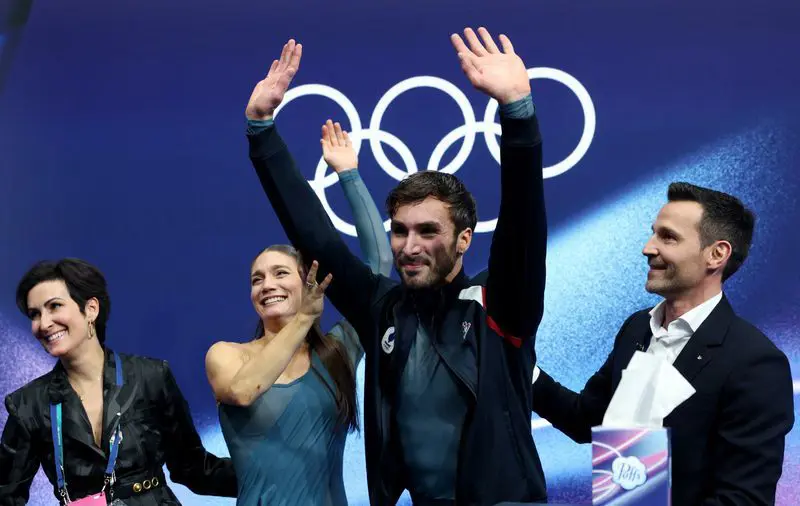
The ice dance final at the 2026 Winter Olympics delivered drama long after the music stopped.
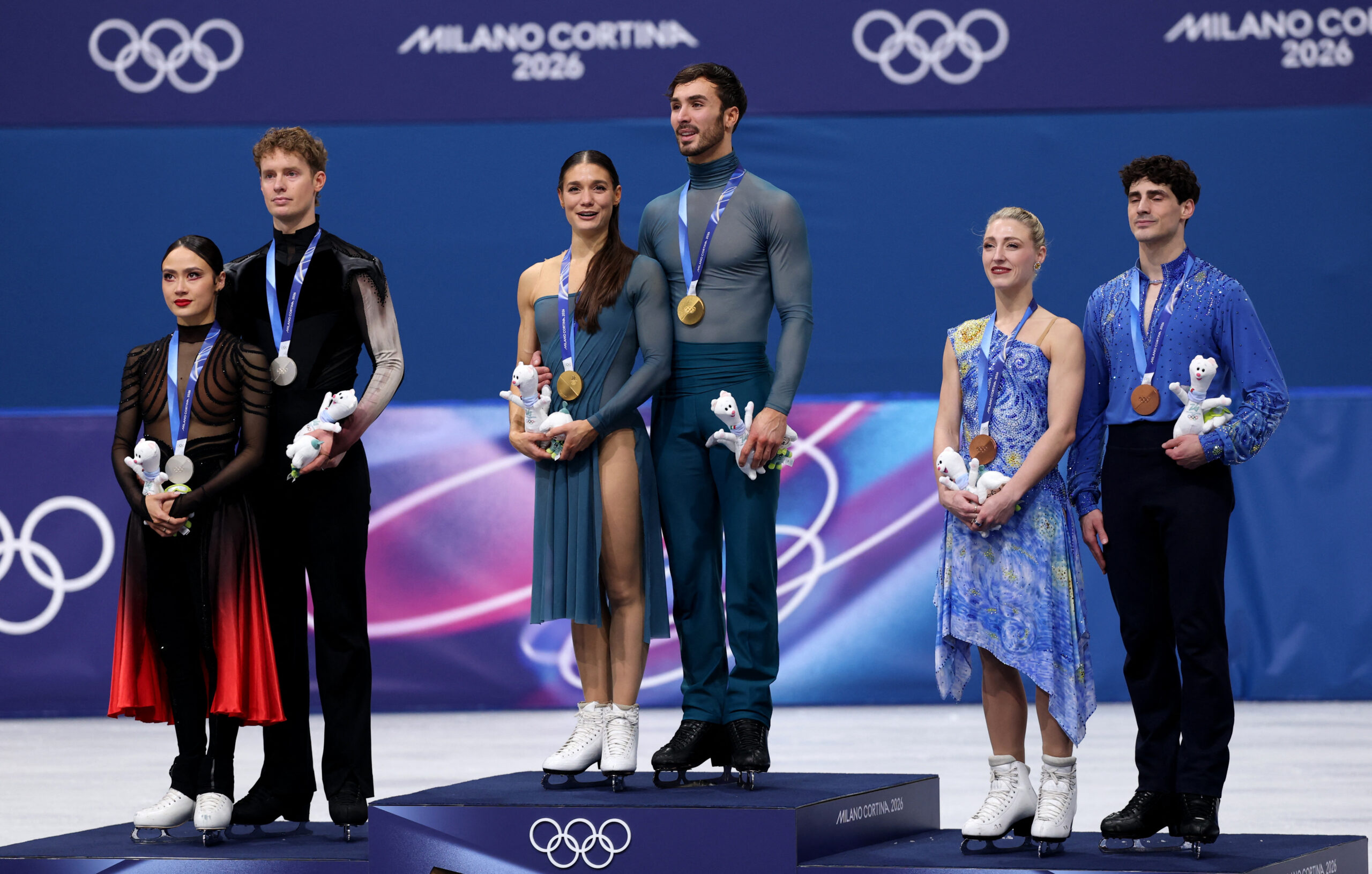
When Laurence Fournier Beaudry and Guillaume Cizeron captured Olympic gold with 225.82 points, they edged out Team USA’s Madison Chock and Evan Bates by just 1.43 points (224.39).
What should have been a celebration quickly turned into one of the most debated results of the Games.
The Scoring Dispute
The controversy centered on judging discrepancies in the free dance.
One French judge, Jézabel Dabouis, awarded the French pair a score nearly eight points higher than the Americans in that segment — 137.45 to 129.74. Critics noted that her mark for Chock and Bates was the lowest among the nine judges and more than five points below the panel’s average.
Social media erupted. Accusations of national bias surfaced. Some fans labeled the situation “SkateGate 2.0,” and a petition calling for an independent review gathered thousands of signatures.
The International Skating Union (ISU), however, publicly defended the outcome, expressing full confidence in the judging panel and the integrity of the scoring system.
Haguenauer Fires Back
At the center of the storm stood legendary coach Romain Haguenauer, widely regarded as one of the sport’s most influential figures and the architect behind the 2022 Olympic gold of Gabriella Papadakis and Cizeron.
Haguenauer did not waver.
“This is only their first season,” he said after the final. “Their age in four years is absolutely not a barrier. I would be surprised and a bit frustrated if they decided to stop. This is just the beginning of their story.”
At 33 and 31, Fournier Beaudry and Cizeron are considered mature by ice dance standards. But Haguenauer framed their experience as an advantage, not a limitation — citing their chemistry, composure, and depth of performance as qualities that flourish under Olympic pressure.
He dismissed the uproar as surrounding “noise,” insisting that what unfolded on the ice was precision, complexity, and championship-level execution.
Historic Context
Beyond the controversy, the victory marked a milestone: Cizeron became the first ice dancer to win Olympic gold with two different partners — a rare achievement in a discipline defined by long-term partnerships.
Both teams train at the renowned Ice Academy of Montreal, under Haguenauer’s leadership, adding another layer to the rivalry. The margin was razor-thin. The stakes were enormous.
Fournier Beaudry and Cizeron acknowledged minor errors in their free dance but maintained their program carried greater technical complexity. They stated their original goal had been to win by five to seven points, estimating mistakes cost them several.
Chock and Bates, for their part, called their skate a “gold medal performance” but remained measured and professional in defeat.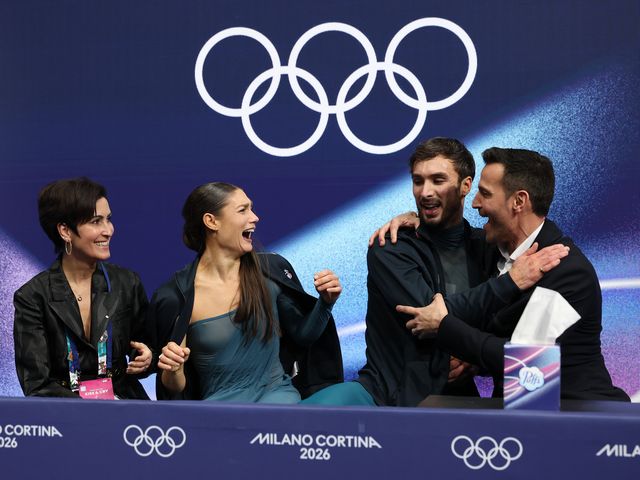
Brilliance or Bias?
In Olympic figure skating, fractions of a point can define legacies. This result — separated by 1.43 — has split the skating world.
Was it artistry under pressure?
Was it scoring subjectivity?
Or simply the razor’s edge of elite sport?
What is certain is this: the debate has ensured that Milano Cortina’s ice dance final will be remembered not only for its choreography, but for the questions it left behind.