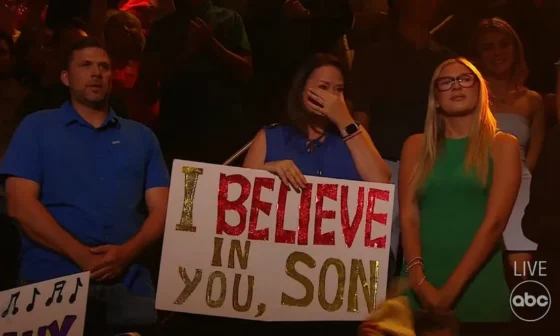
For years, Sheldon Riley was known for spectacle. Elaborate costumes, dramatic silhouettes, and carefully designed masks became part of his artistic identity — not as a gimmick, but as a shield. On stages around the world, the Australian singer hid in plain sight, letting fabric and form speak before he did. But when Riley stepped onto the American Idol stage, everything changed.
This time, there were no masks. No layers to hide behind. Just a voice — and the courage to let it be heard.
From the moment he began to sing, it was clear this wasn’t an ordinary audition. Riley’s performance felt raw and deeply personal, unfolding like a quiet confession rather than a bid for applause. The theatrics that once defined his performances were replaced with stillness, allowing his voice and vulnerability to take center stage. Every note carried weight, shaped by years of experience, self-protection, and hard-earned confidence.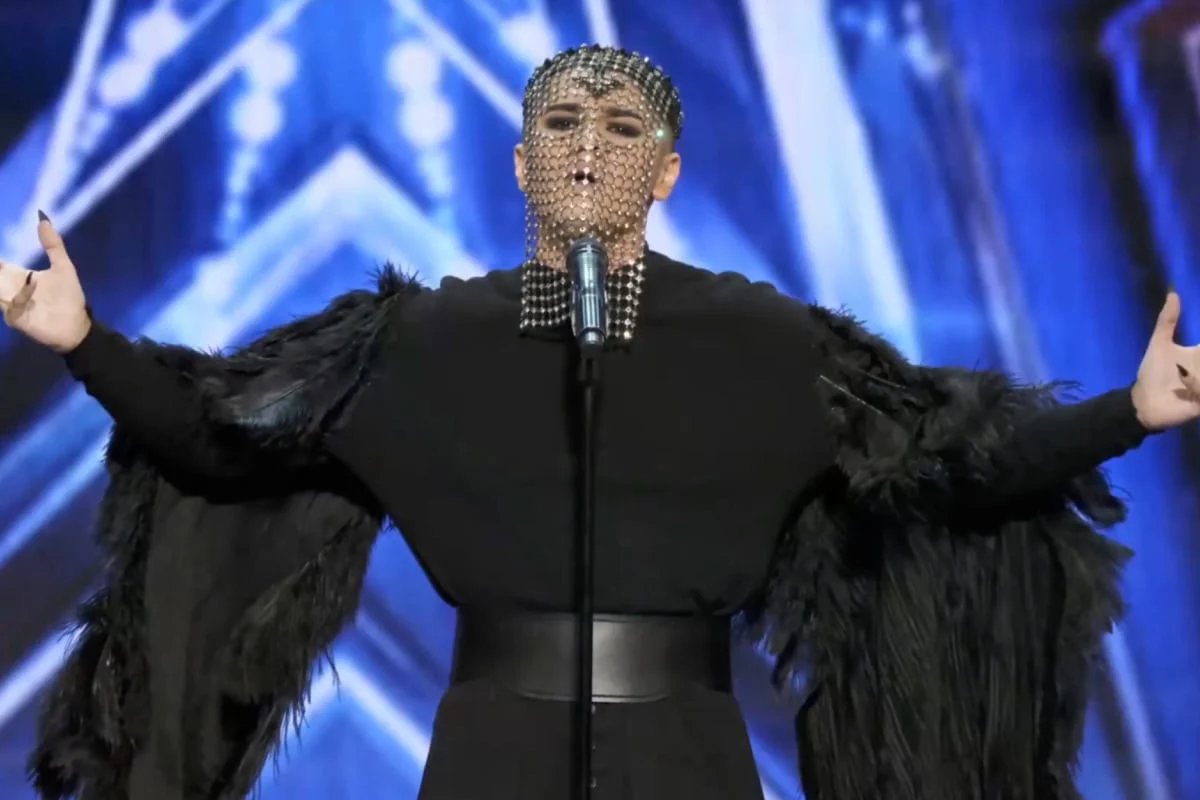
The judges felt it immediately.
As Riley sang, the room seemed to lean in. The usual chatter and anticipation that fill the audition space gave way to focused silence. By the time he finished, the emotion was unmistakable. The judges praised not only the strength and control of his vocals, but the bravery it took to show up as himself — unguarded and honest.
When the golden ticket to Hollywood was finally awarded, it felt less like a win and more like a recognition.
For Riley, this moment marked a profound shift in his journey as an artist. Known internationally for his striking visual presentations, he had often used costumes as a way to communicate what words couldn’t. But on American Idol, he proved something different: that authenticity can be just as powerful — if not more so — than spectacle.
The decision to strip everything back wasn’t easy. It meant standing in front of millions without the armor he had relied on for years. Yet that risk became the very thing that made the performance unforgettable. By choosing vulnerability over pageantry, Riley invited audiences to connect with him not as a concept, but as a person.
As he moves forward in the competition, Riley’s audition will be remembered not just for how it sounded, but for what it represented. It was a reminder that behind every performance is a human story — one shaped by fear, resilience, and the desire to be seen.
In stepping into the light, Sheldon Riley didn’t lose the magic that made him unique. He redefined it.