He opened with fire.
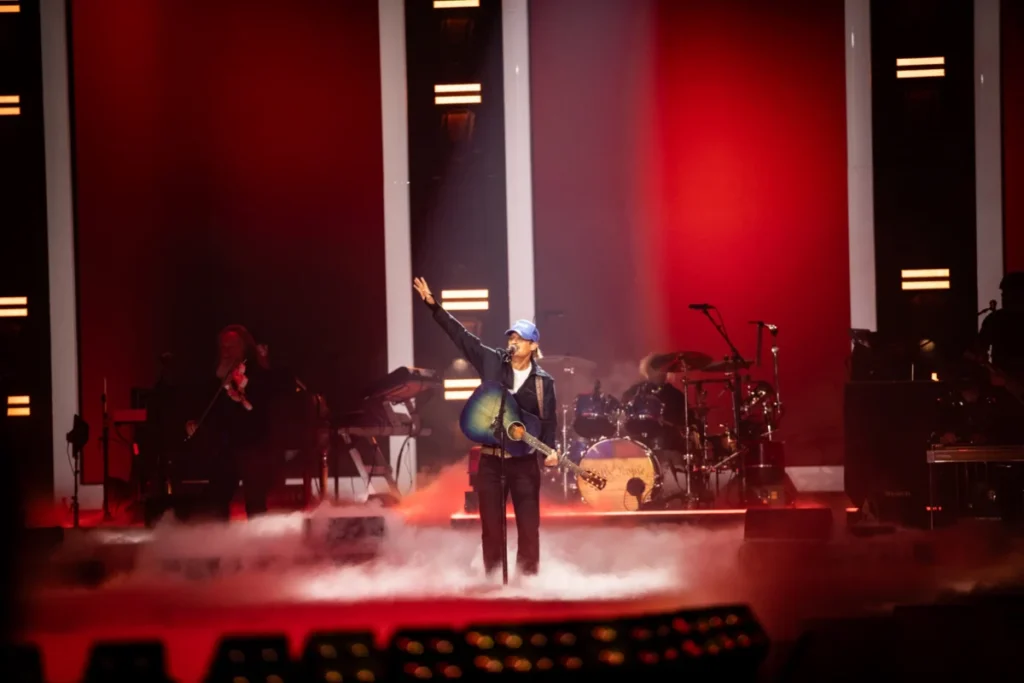
Flames climbed toward the rafters. The bass thundered. The crowd roared as the unmistakable opening of “Bawitdaba” shook the arena. At the Turning Point USA All-American Halftime Show, Kid Rock arrived exactly as expected — loud, defiant, larger than life. It was the spectacle fans have known for decades: explosive energy, swagger, and a stage presence built on pure adrenaline.
And then, just as suddenly as it began, the chaos stopped.
The lights dimmed. The smoke settled. The roar softened into something closer to anticipation.
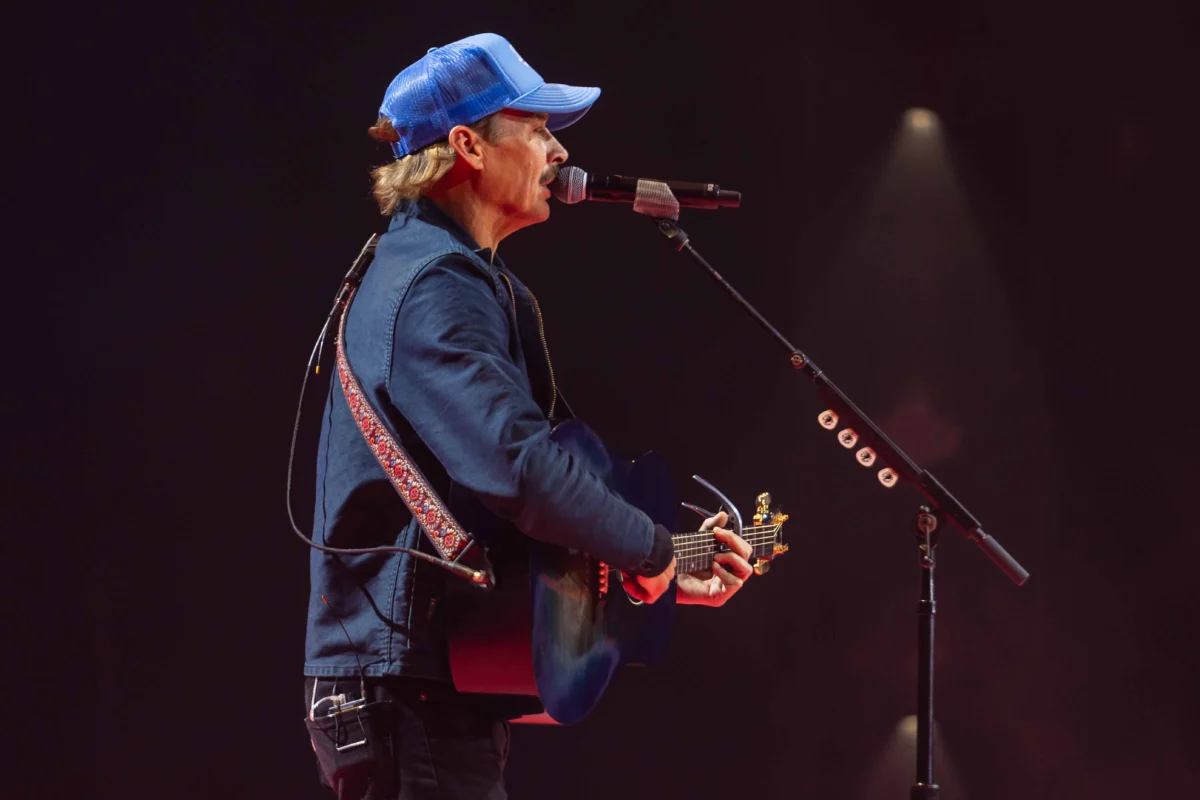
When the spotlight returned, the figure standing at center stage felt different. The bravado was gone. The theatrics had vanished. What remained was something quieter — something more personal.
Kid Rock had stepped back.
Robert Ritchie stepped forward.
With only a single spotlight illuminating him, he began a stripped-down, country-style rendition of “’Til You Can’t.” The performance carried none of the bombast that had filled the arena moments earlier. Instead, it held something deeper — restraint, sincerity, and reflection. Keeping Cody Johnson’s powerful lyrics intact, Ritchie added a personal verse of his own, weaving his voice into the song’s message about time, legacy, and making moments count.
Behind him, a drum set emblazoned with the Preamble to the U.S. Constitution stood in quiet symbolism. It wasn’t loud or flashy, but it didn’t need to be. The message was clear: this performance wasn’t just about music. It was about conviction.
The transformation felt deliberate — almost symbolic. The rockstar persona, built on rebellion and spectacle, gave way to something more grounded. It was as if the flames that opened the night had burned away the performance, leaving only the man beneath it.
And that shift changed the room.
What began as entertainment evolved into reflection. What started as chaos ended in stillness. In that stillness, there was space — space to listen, to think, to feel.
Whether you saw it as artistic evolution, personal expression, or a bold cultural statement, one thing was undeniable: it was a moment.
Sometimes, artists reinvent themselves gradually. Sometimes, they do it in a single night, under a single spotlight.
On that stage, for those few minutes, Kid Rock didn’t just perform.
He revealed Robert Ritchie.