Just days after finishing a heartbreaking eighth in the Olympic men’s final, Ilia Malinin returned to the ice — but this time, he wasn’t chasing medals. He was confronting something far more personal.
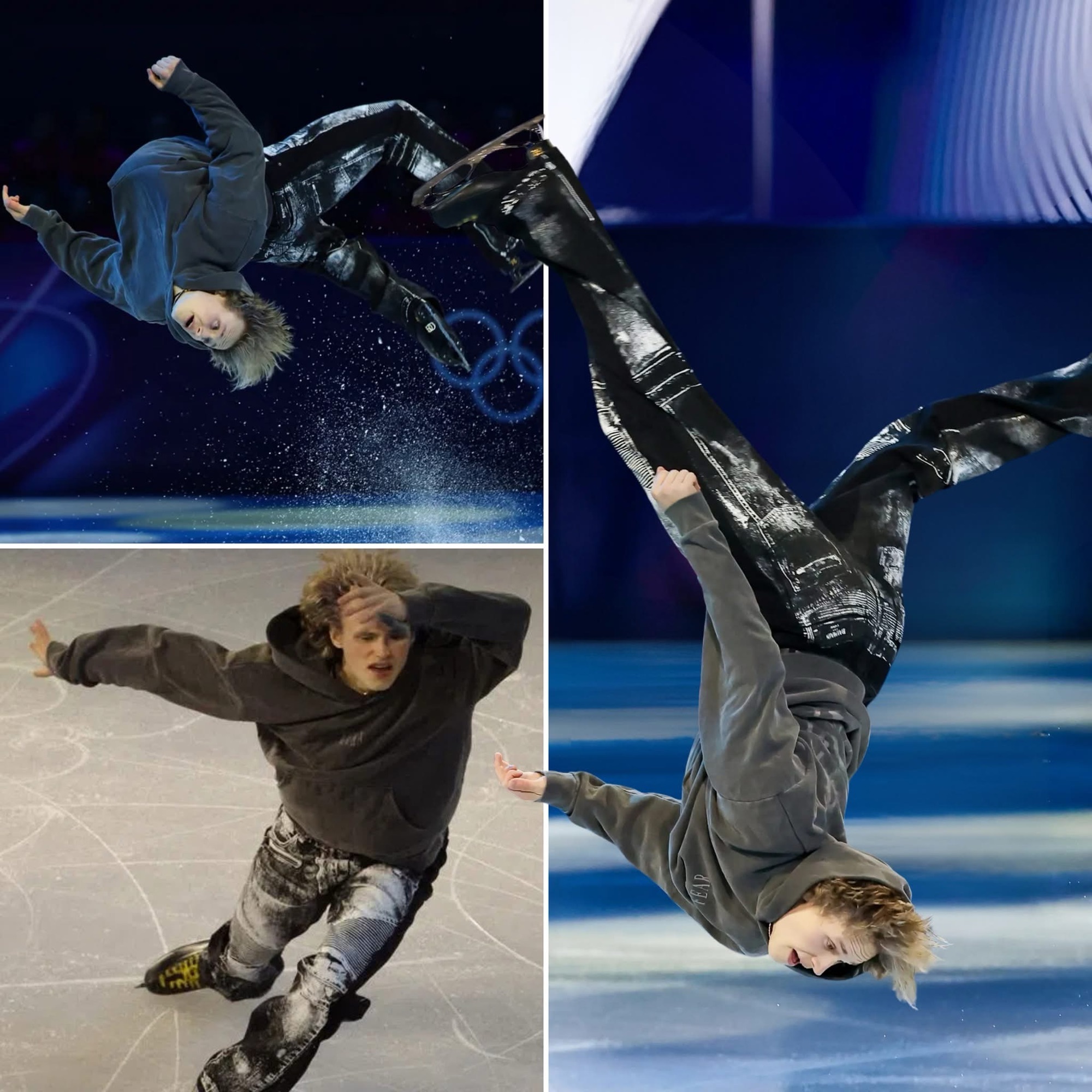
At the Exhibition Gala, where skaters trade competitive tension for artistic freedom, Malinin delivered a performance that felt less like entertainment and more like confession. Skating to “Fear” by NF, he stripped away the polish and delivered something raw, rebellious, and emotionally charged.
The program opened in near stillness. Then came the sharp, deliberate gestures — swatting at invisible notifications, brushing away phantom distractions. The symbolism was unmistakable. In an era where athletes live under constant digital scrutiny, Malinin transformed social media “pings” into a haunting on-ice metaphor. Every swipe of his hand felt like a rejection of criticism. Every step carried tension.
It was choreography shaped by the modern athlete’s reality — one where performances are dissected in real time, where praise and condemnation arrive in equal measure, often within seconds.
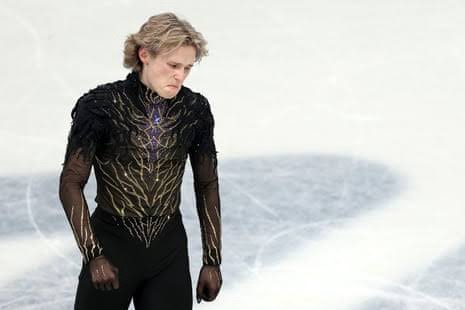
Yet there was no self-pity in his movement. Instead, there was defiance.
Malinin’s skating, long celebrated for its technical audacity and quad dominance, took on a different tone. The jumps were still powerful, the edges still sharp — but this time, emotion drove the narrative. His body language carried frustration, vulnerability, and resolve. It was as though he was saying: You can judge me. You can doubt me. But you don’t define me.
The choice of “Fear” amplified the message. The music’s intensity mirrored the weight of expectation placed on him as one of the sport’s brightest young stars. Coming into the Games, Malinin had been hailed as a revolutionary talent — the “Quad God,” capable of rewriting technical limits. An eighth-place finish was not what the world predicted.
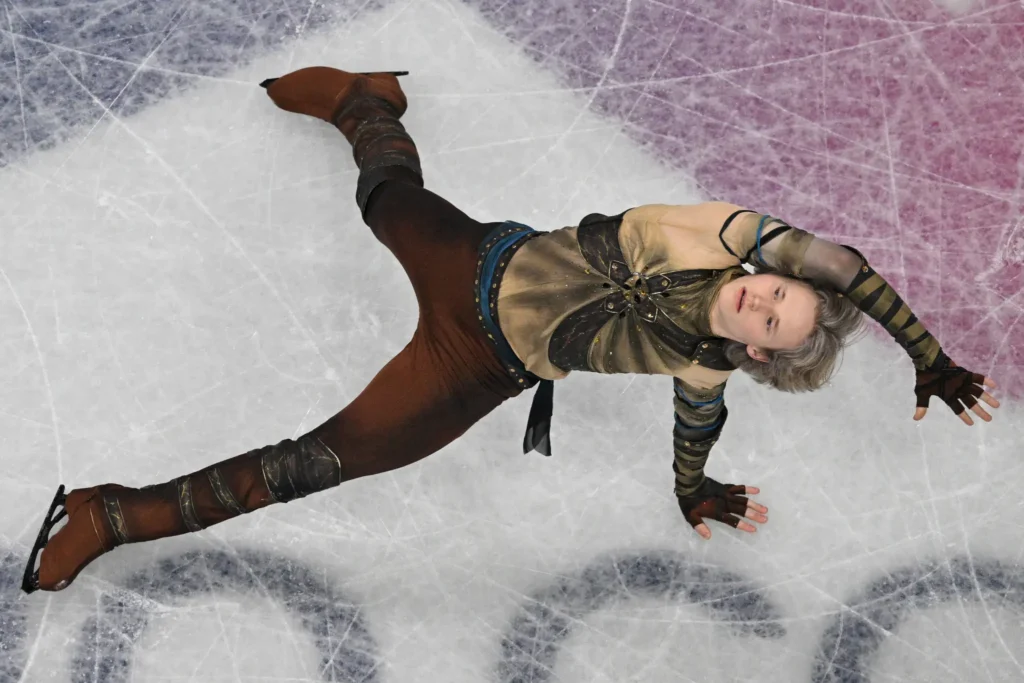
But sport is rarely predictable.
What makes champions compelling isn’t only victory — it’s how they respond when victory slips away. In that gala performance, Malinin didn’t attempt to rewrite the result. He reframed the narrative. He turned disappointment into art.
The audience felt it. This wasn’t the polished smile of a medal ceremony. It was something more human. More urgent. More real.
Exhibition programs often allow skaters to show personality beyond competition. For Malinin, it became a moment of reckoning — and resilience. By the final pose, the message was clear: setbacks may echo loudly, but they do not silence ambition.
Days earlier, he left the ice carrying disappointment.
At the gala, he returned carrying power.
And sometimes, that kind of performance says more than any podium ever could.