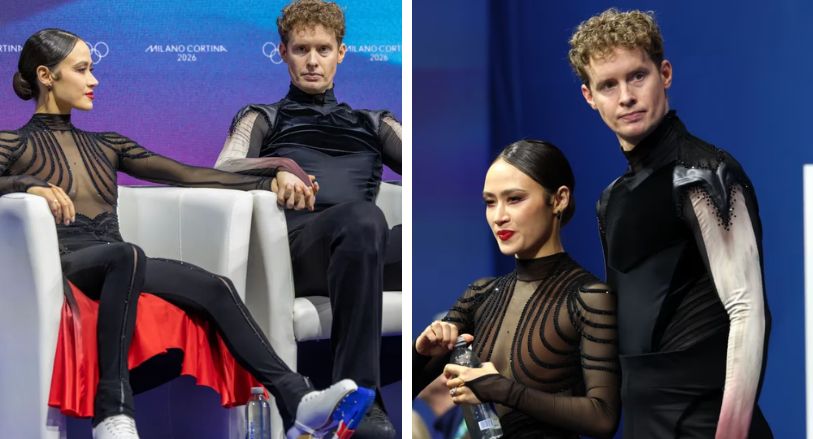
The medals have been awarded, but the conversation is far from over.
After finishing just 1.43 points behind France’s Laurence Fournier Beaudry and Guillaume Cizeron at the 2026 Winter Olympics, Madison Chock and Evan Bates are calling for greater transparency and accountability in ice dance judging — a request that has reignited debate across the skating world.
Speaking with CBS News, Chock carefully chose her words but made her stance clear. She said it would be “definitely helpful” if judging were more understandable for viewers and more transparent overall. But she went a step further, adding that judges themselves should be “vetted and reviewed” to ensure fairness at the highest level of the sport.
“There’s a lot on the line for the skaters when they’re out there giving it their all,” Chock said. “We deserve to have the judges also giving us their all and for it to be a fair and even playing field.”
A Razor-Thin Margin
The Americans entered the free dance as slight underdogs, trailing the French duo by just 0.46 points after the rhythm dance. Chock and Bates delivered a world-best 89.72 in that opening segment, only to be narrowly surpassed by Fournier Beaudry and Cizeron’s 90.18.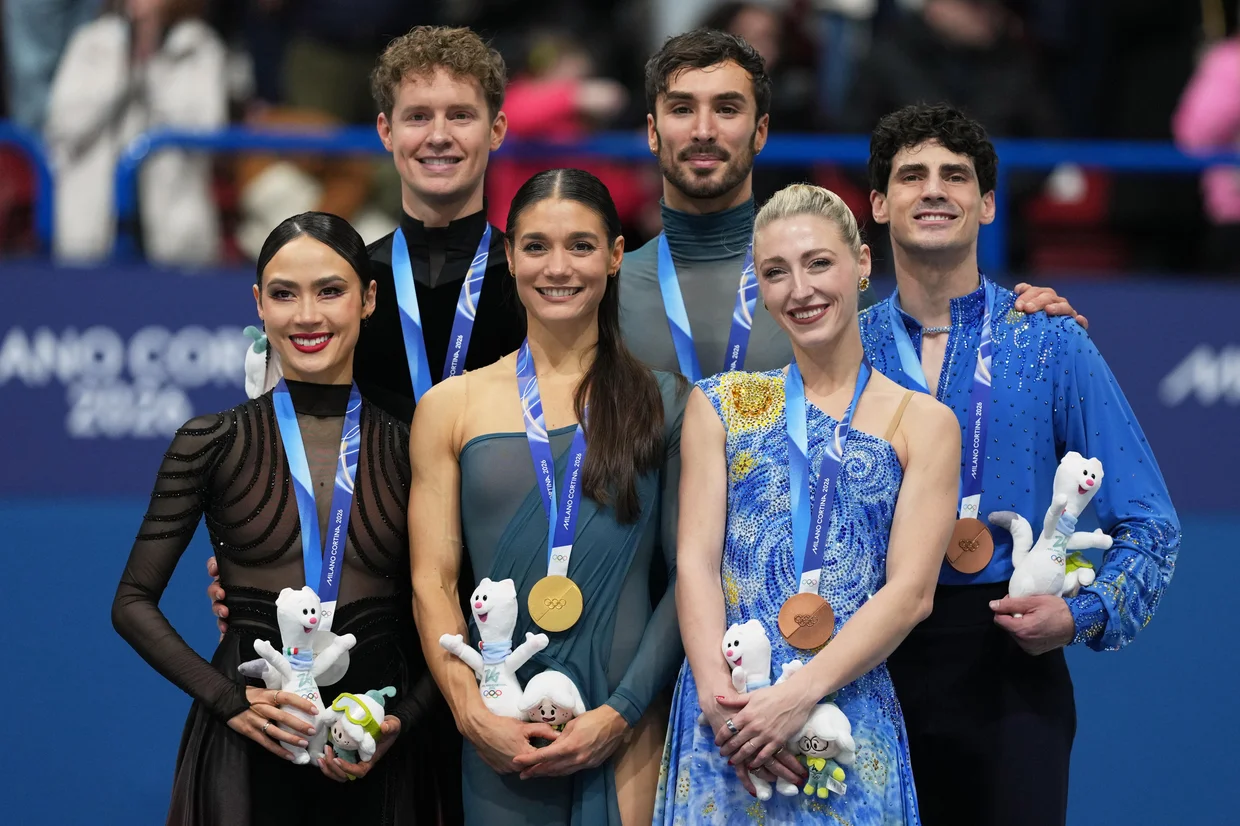
In the free dance, Chock and Bates performed to “Paint It Black” from Westworld, earning 134.67 points in what many observers described as a powerful and precise skate. The French team followed with a program set to The Whale, scoring 135.64 — less than a point higher — securing gold with a total of 225.82 to the Americans’ 224.39. Canada’s Piper Gilles and Paul Poirier claimed bronze with 217.74.
Yet controversy swirled almost immediately. During the French free dance, Cizeron appeared to make a mistake on a twizzle — a one-footed traveling spin — and some viewers felt the program lacked the polish of the Americans’ performance. Notably, the French team did not appear to receive significant deductions for the error.
Questions About Subjectivity
Ice dance scoring combines base value with grades of execution and artistic components such as presentation and musical interpretation. While technical details can be reviewed, artistic marks remain inherently subjective.
One statistic in particular caught fans’ attention: the French judge reportedly scored the American team more than seven points lower than the French pair — a sizable gap in a competition decided by fractions. Of the nine judges, five favored Chock and Bates, while the remaining four leaned toward the French team, some only slightly.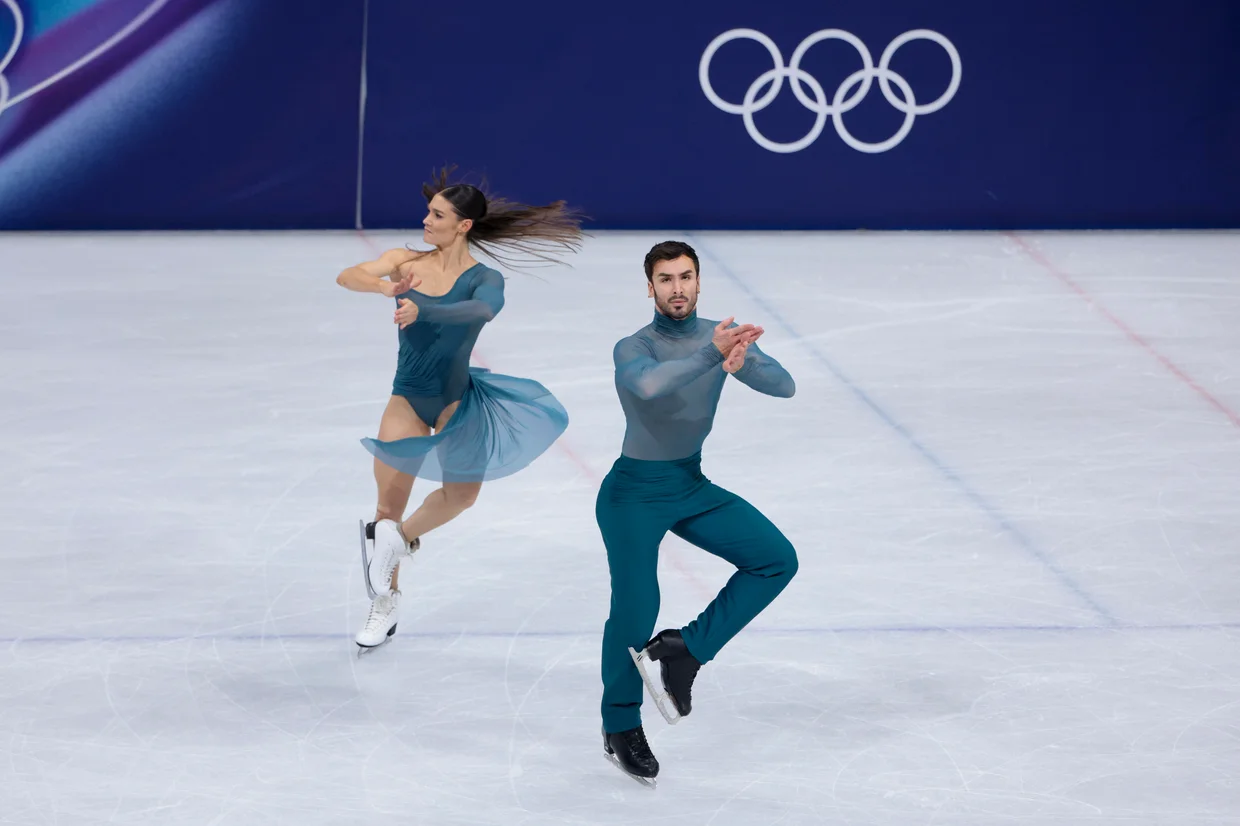
The result has fueled widespread online analysis, slow-motion breakdowns, and renewed calls for clearer scoring explanations in one of figure skating’s most subjective disciplines.
Pride Amid Bittersweet Emotions
Despite the debate, Chock and Bates struck a tone of grace.
“It’s definitely a bittersweet feeling,” Chock said after the event. “We’ve had the most incredible year — 15 years on the ice together, our first Olympics as a married couple. We delivered four of our best performances this week. We’re proud of how we handled ourselves and what we accomplished.”
Bates echoed that sentiment, calling it their “absolute best performance” and saying the skate “felt like a winning performance to us — and that’s what we’re going to hold on to.”
Whether or not any formal review follows, their comments have ensured one thing: the discussion around Olympic ice dance judging is far from settled. In a sport where medals are decided by decimals, clarity — and trust — may now be the most valuable prize of all.