The Milano Cortina 2026 Winter Games were supposed to be Ilia Malinin’s defining moment.
The arena in Milan pulsed with anticipation. Cameras were ready. Commentators spoke in reverent tones. Fans expected brilliance — perhaps even history — from the American skating phenom who has built his reputation on redefining what’s possible on ice.
Then, in a matter of seconds, everything changed.
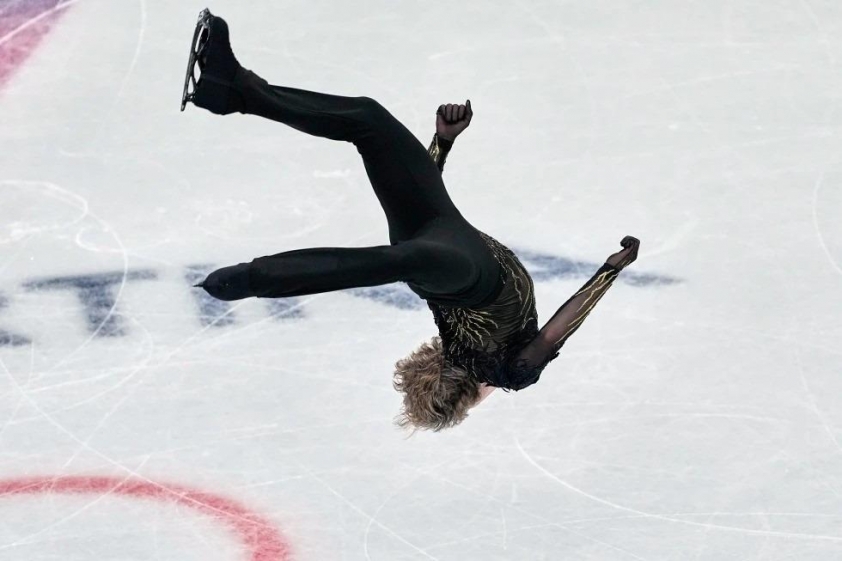
A fall.
Then another.
The sound inside the arena shifted from roaring excitement to something far heavier — a stunned, almost chilling silence. The kind of silence that only comes when thousands of people are witnessing something they cannot quite process.
This wasn’t supposed to happen.
A Dream Unraveling in Real Time
Malinin’s free skate had been billed as one of the most anticipated performances of the Games. Known for his technical daring and unshakable confidence, he stepped onto the Olympic ice carrying not just expectations, but belief — belief that he would deliver something unforgettable.
Instead, the program fractured under the brightest lights in sport.
Each mistake felt amplified. Each stumble carried the weight of a global audience. By the time the music ended, the scoreboard delivered the final blow: eighth place.
For a skater many expected to stand atop the podium, it was a result that stunned the world.

The Confession That Changed the Conversation
But what happened next may have mattered even more.
Through visible emotion, Malinin didn’t blame his technique. He didn’t point to an injury. He didn’t search for excuses.
“I felt like I had no control,” he admitted.
The cause, he revealed, wasn’t physical — it was mental. A surge of “negative thoughts” had overwhelmed him before the program even began. Doubt crept in. Pressure mounted. And on a stage where margins are razor-thin, that internal storm proved devastating.
It was a rare and powerful moment of honesty.
The Invisible Opponent
The Olympics are often framed as a test of strength, endurance, and technical mastery. But beneath the jumps, spins, and choreography lies another battle — one fought silently in the mind.
Malinin’s confession pulled back the curtain on that reality.
Even the most gifted athletes are not immune to fear. Even the most dominant competitors can feel doubt under the crushing weight of expectation. The difference between gold and heartbreak is sometimes not muscle memory, but mindset.
In Milan, the world didn’t just witness falls on ice.
It witnessed the human side of greatness.
More Than a Result
Yes, the eighth-place finish will be recorded in Olympic history. Yes, the performance will be replayed and analyzed.
But what may endure longer is the image of a young superstar choosing vulnerability over deflection.
Because sometimes the bravest moment isn’t landing the impossible jump.
It’s standing in front of the world and admitting that, for a brief and painful moment, your own thoughts took control.
And in that quiet Milan arena, amid the shock and the silence, Ilia Malinin reminded us that even legends are human.