What began as a familiar explosion of sound quickly transformed into one of the most talked-about live moments of the year.
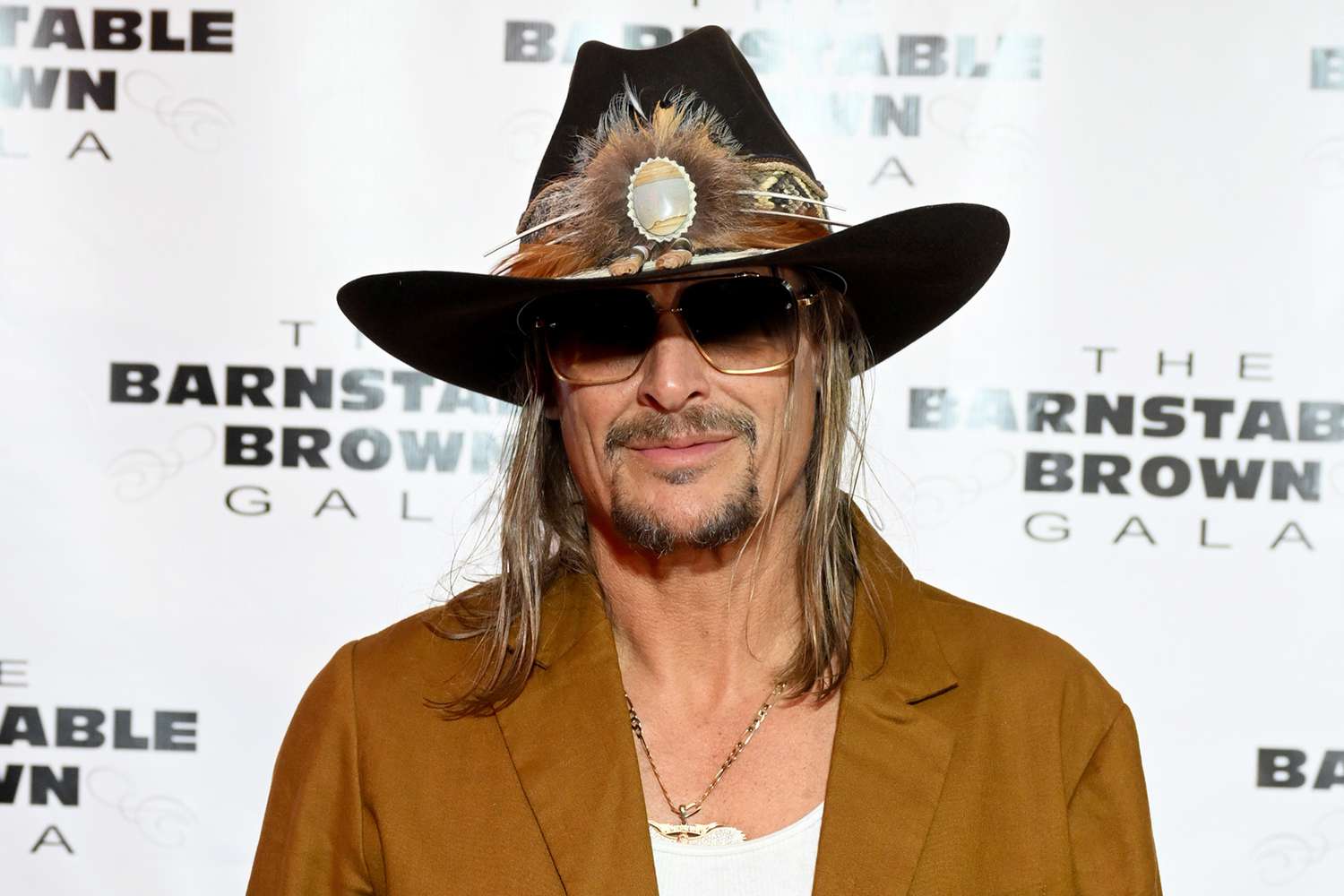
At the Turning Point USA All-American Halftime Show, Kid Rock opened exactly as fans expected — with fire, force, and full-throttle swagger. “Bawitdaba” roared through the venue as flames shot skyward and guitars thundered. It was the larger-than-life persona audiences have known for decades: bold, confrontational, unapologetic.
For a moment, it felt like classic Kid Rock — spectacle, adrenaline, and controlled chaos.
Then everything changed.
Mid-set, the noise fell away. The lights dimmed. The bombast disappeared.
When he stepped back into the spotlight, it wasn’t the explosive rock persona commanding the stage. It was Robert Ritchie — stripped down, reflective, and unexpectedly vulnerable. Under a single light, he delivered a raw, country-style rendition of “Til You Can’t,” originally by Cody Johnson.
The shift was dramatic. Gone were the flames and defiance. In their place stood a quieter message about urgency, time, and saying what matters while you still can. Some viewers noted he appeared to add a personal verse, turning the performance into something that felt less like a cover and more like a statement.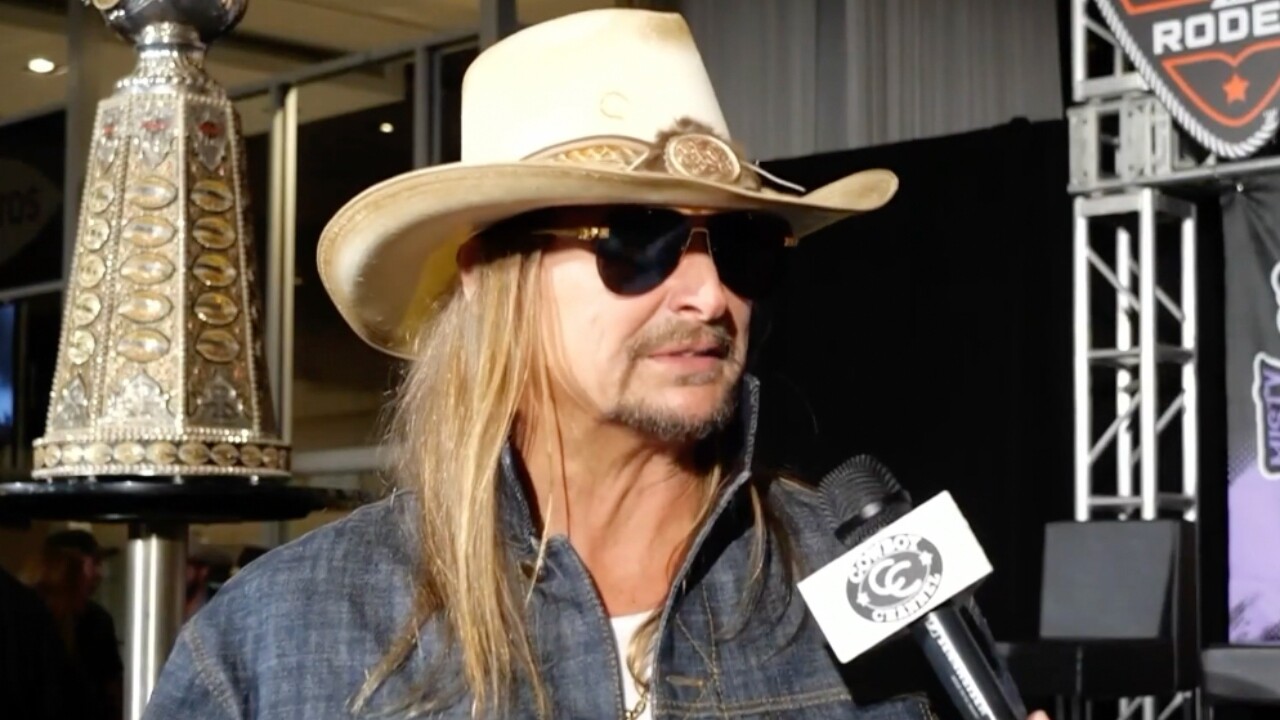
Behind him, a drum set bearing the Preamble to the U.S. Constitution added another layer of symbolism — one that supporters praised as patriotic and critics viewed through a political lens. Given the context of a Turning Point USA event, interpretation was inevitable.
And that’s precisely why the moment went viral.
Clips of the performance quickly spread online, with many fans describing it as a rare instance of persona giving way to person. The phrase “burned down the persona” began circulating — a metaphor suggesting that beneath the decades-long rockstar image lies something more grounded and reflective.
For supporters, it was a powerful reminder that even the loudest voices can carry quiet truths. For skeptics, it raised questions about performance versus authenticity in an era where every stage is also a platform.
But regardless of interpretation, one thing was clear: the pivot worked.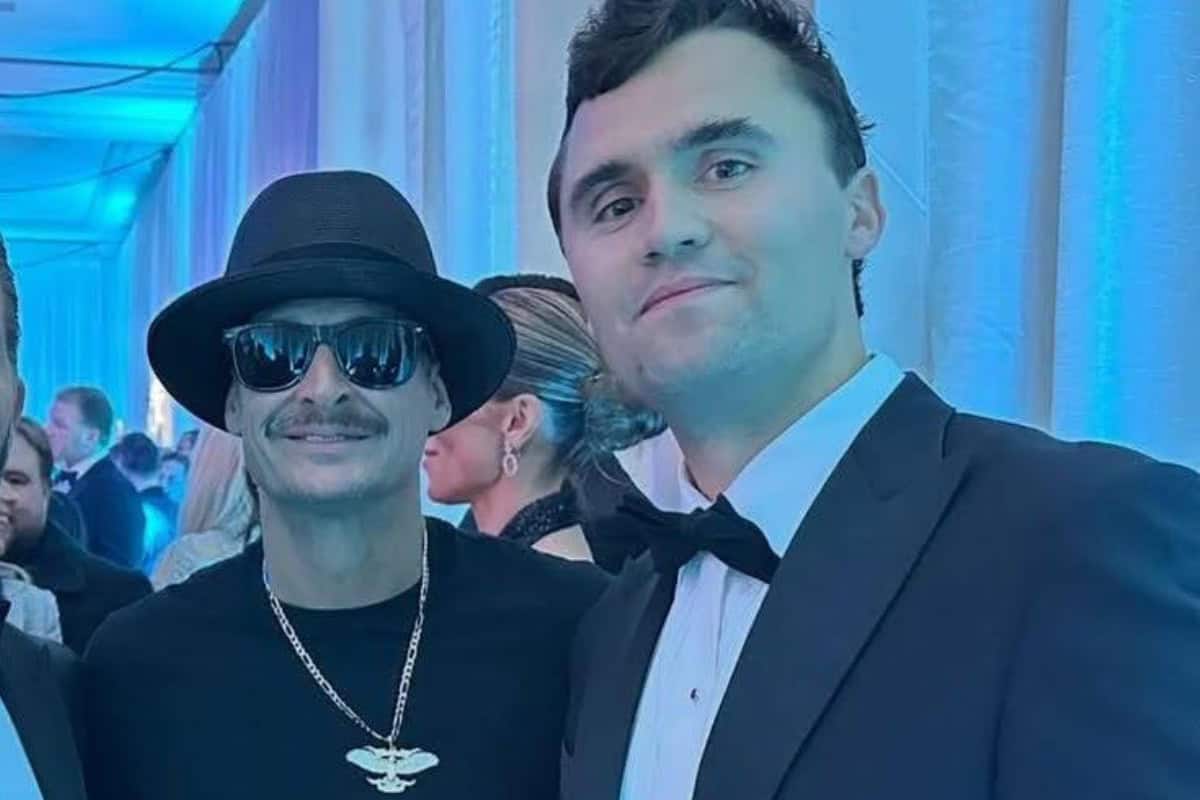
In a cultural landscape driven by predictability and branding, surprise is powerful currency. The contrast between the explosive opener and the stripped-down closer created a narrative arc that felt intentional — rebellion giving way to reflection, spectacle softening into sincerity.
Halftime shows are typically designed as entertainment breaks. This one became something more — a conversation about identity, legacy, and the tension between image and reality.
Whether seen as reinvention, confession, or calculated artistry, Kid Rock’s Turning Point USA performance achieved what every live artist hopes for: it made people pause, debate, and feel.
And in the end, it wasn’t the flames that lingered — it was the stillness.