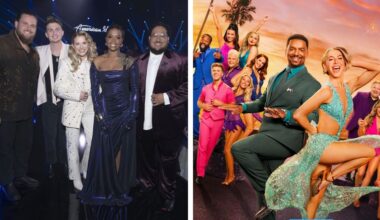
Another season of Strictly Come Dancing has crowned its champion, but instead of universal celebration, the victory has reignited a familiar and increasingly heated debate. Once again, viewers are asking whether the competition is still living up to its promise of fairness — and whether the term “non-dancer” has lost all real meaning.
The latest controversy gained momentum after James Jordan, former Strictly professional and outspoken critic, weighed in with revelations that struck a nerve with fans. His comments reopened long-standing questions about prior dance experience, training advantages, and how level the playing field truly is when celebrities step onto the ballroom floor.
At the heart of the issue is Strictly’s defining premise: celebrities with no formal dance background learning from scratch. It’s a concept that made the show relatable and thrilling — watching nervous beginners grow week by week. But as winners increasingly arrive with backgrounds in theatre, musical performance, or movement-heavy careers, many viewers feel that original spirit is slipping away.
Social media reaction has been swift and unforgiving. Fans have pointed out that while some contestants struggle just to find the beat, others appear polished from week one. To frustrated viewers, the idea that such contestants are still labelled “non-dancers” feels misleading, if not outright disingenuous.
James Jordan’s intervention added fuel to the fire precisely because of his insider status. As someone who knows the show’s mechanics intimately, his comments carried weight. While he stopped short of accusing the programme of manipulation, his words suggested that the boundaries around eligibility may be far looser than the audience realises.
Defenders of the show argue that dance experience exists on a spectrum. Theatre training, they say, is not ballroom dancing. Musicality is not mastery. And learning Strictly’s highly technical styles still requires discipline, vulnerability, and growth — even for those comfortable on stage.
Yet critics counter that perception matters as much as reality. When viewers feel the outcome is predetermined, emotional investment falters. The underdog journey — once Strictly’s beating heart — becomes harder to believe when finalists look competition-ready from their very first routine.
The BBC now finds itself walking a familiar tightrope. The show remains one of the broadcaster’s biggest successes, but repeated fairness storms risk eroding trust. Without clearer transparency around what qualifies as a “non-dancer,” each controversial win threatens to overshadow the joy of the result itself.
Perhaps the question Strictly must now face is not whether its winners deserve their trophies — but whether the show needs to redefine its rules for a new era. Because if audiences no longer believe the contest is fair, no amount of glitter, sequins, or perfect scores will be enough to drown out the doubt.